Animals get into Livermore chimneys because an open or damaged flue looks like a hollow tree. Chimney swifts and other birds drop nesting material straight down the flue; the nest of twigs and grass blocks the smoke…
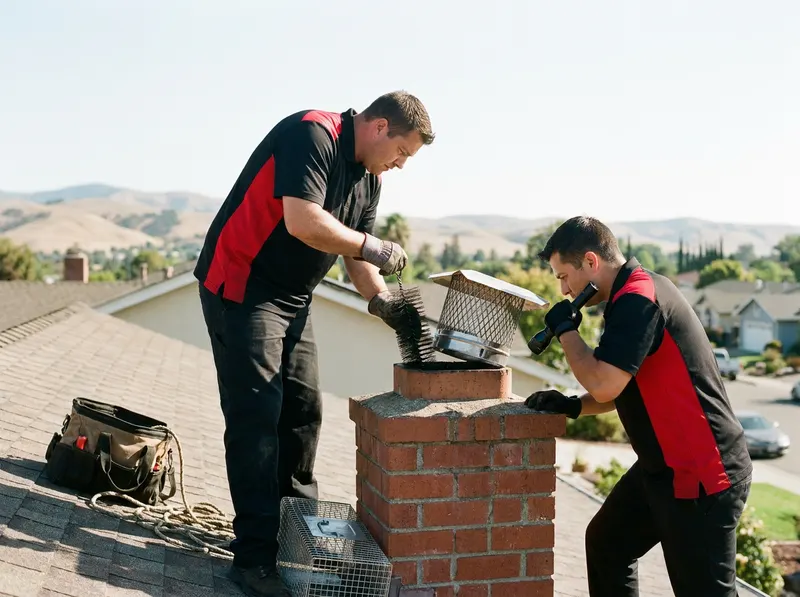
Animals get into Livermore chimneys because an open or damaged flue looks like a hollow tree. Chimney swifts and other birds drop nesting material straight down the flue; the nest of twigs and grass blocks the smoke chamber and, per NFPA 211, becomes a combustible obstruction that can catch fire the first time a fire is lit. Raccoons climb down uncapped flues in Old North Livermore and Proud Country to den and raise young, and squirrels favor the taller masonry stacks around South Livermore Valley and the Vineyard Avenue District. Removing a bird from a chimney or removing a nest starts with a top-down camera look so the blockage is located and identified before anything is disturbed.
The work follows a short sequence. First, the flue is inspected from the top and, where accessible, from the firebox, matching a CSIA Level 1 or Level 2 inspection depending on what the camera shows. Second, live animals are cleared before any mechanical work, raccoon young are handled with care, and California law protects nesting migratory birds, so an active nest with eggs or chicks may require timing the removal until the birds have fledged. Third, the nest is removed and the chimney is cleaned out, with droppings and debris bagged and carried out. Fourth, a spark arrestor cap is fitted to keep the raccoons out and stop the next animal from moving in.
The cap choice is the decision that matters most. A standard galvanized cap is the low-cost option and blocks large animals, but the mesh corrodes faster in the damp winters near Mocho Park and Springtown. A custom, ideally 316 stainless mesh animal spark arrestor is the longer-lasting choice: 316-grade stainless resists rust and the mesh openings meet the code intent of keeping out animals and holding sparks. A single-flue stainless cap fits most homes in Windmill Springs and Tri-Valley Estates; multi-flue or oversized masonry crowns common on older Dunsmuir and Sunset houses need a custom-fabricated guard sized to the crown. If a chimney has never been capped and animals keep returning, the stainless mesh guard is the fit; if a cap already exists and only the mesh is torn, a mesh repair may be enough.
One detail owners often miss: removing the animal without capping the flue almost always leads to a repeat visit, because the open top that let the first animal in stays open. Homeowners who want to compare options can get some quotes and a free on-site estimate that confirms the flue size, crown condition, and the exact cap needed before any work is scheduled. The phone line is (925) 582-0931.
Every job gets a firm, written price after a free on-site visit.
Tell us about your animal removal & spark arrestor job in Livermore and we'll send a clear, written quote, usually the same day.
 Hearthkeeper Chimney Sweep